 Best sellerNew
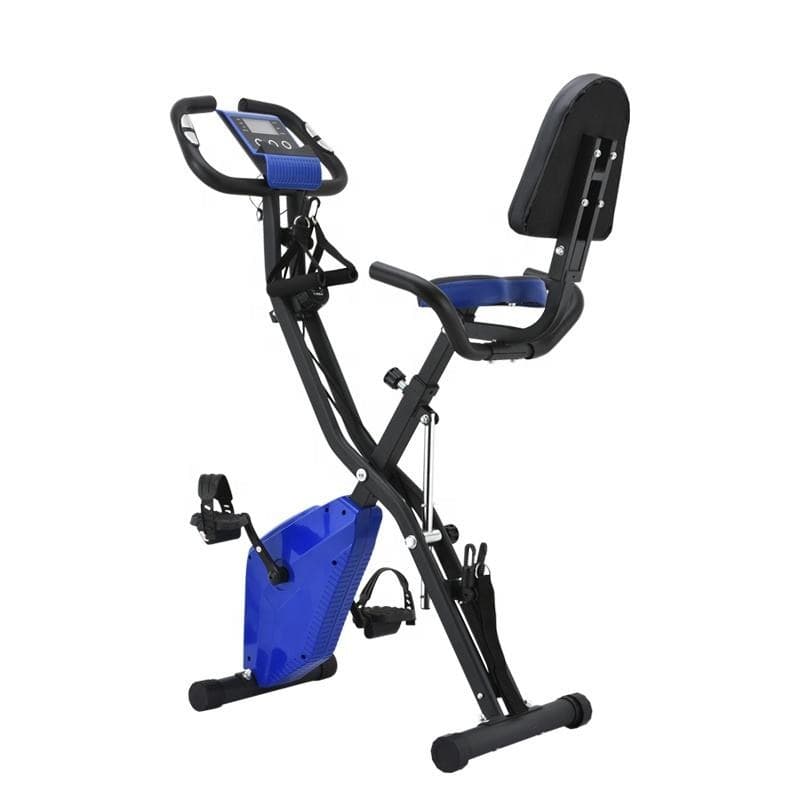
FoldFit X1 Folding Exercise Bike
A full workout that folds flat. Quiet 16 level magnetic resistance, an easy-read display, and a frame that tucks behind a door when you are done.
£179.99inc. VATIn stock
A 2-in-1 cross trainer and exercise bike is one machine trying to do two jobs: pedal it seated like a bike, or stride on it standing like a cross trainer. We should say plainly, before anything else: we do not sell one, and we have never used one. This page is not a shop page. It is the honest answer to whether you should buy one at all, and for most people the answer is no, because a machine built for two jobs usually does neither as well as a machine built for one. But not for everyone, and the difference is worth five minutes: if you are genuinely short on both space and budget and want both movements, a 2-in-1 is a real option, and further down we tell you exactly what to check so you pick a decent one.
 Best sellerNew
A full workout that folds flat. Quiet 16 level magnetic resistance, an easy-read display, and a frame that tucks behind a door when you are done.
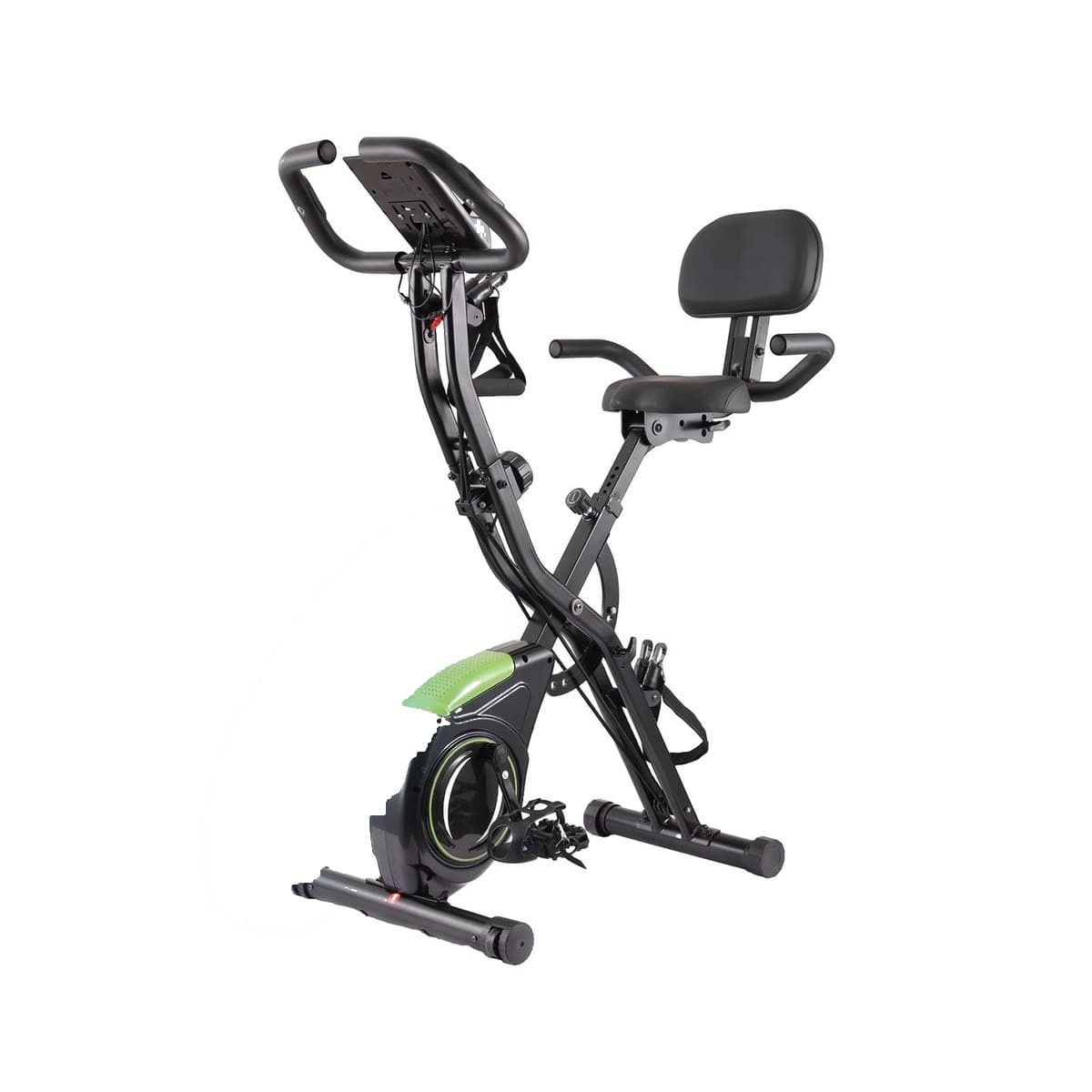
NewA compact upright bike for steady home cardio. Smooth magnetic resistance, an adjustable seat, and a small footprint that fits a spare room or corner.
We sell dedicated exercise bikes, not combos: machines that spend their whole budget on doing one thing properly. Both of these suit small spaces, from £149.99 including VAT, with free UK delivery, a 2 year warranty, 14 day returns, and interest-free instalments with Klarna or Clearpay, subject to status.
A 2-in-1 is a single compact machine with elliptical-style foot plates, moving arm handles and a saddle. Sit on the saddle and pedal, and it works like an exercise bike. Stand up and stride, and it works like a small cross trainer. The Argos Opti style of machine is the best-known shape of the idea.
The appeal is honest and obvious: two movement patterns, one footprint, one price. The catch is just as honest, and it is mechanical rather than a matter of opinion: both movements have to share one frame, one stride path and one budget, and each gives something up to make room for the other. The rest of this page is about exactly what gets given up, and whether that trade is right for you.
For most people: buy one machine that does its job properly, not one that does two jobs halfway. That is the plain answer, and it is the one a well-watched page-one video reaches about the best-known combo on the UK market. A machine designed around a single movement spends its whole frame, its whole stride path and its whole budget on that movement. A combo splits all three.
If the movement you want is riding, a dedicated bike costs less than you might think: our value exercise bikes start at £59.99 including VAT, and every bike in our full exercise bike range was built to do one job well. If the movement you want is striding, buy a dedicated cross trainer, and we will be straight with you: we do not sell one. That is the honest version of this page, both halves of it.
The 2-in-1 earns its place for one reader in particular, and we describe that reader properly further down, without pretending it is everyone.
Four things, and none of them is a matter of taste. They follow from the design, which is why no brand escapes them:
None of that makes a 2-in-1 a bad product. It makes it a compromise, and a compromise is exactly the right buy for the person whose constraints match it.
You, honestly, if all three of these are true: you want both movement patterns, seated riding and standing striding; you have room for one machine only; and the budget will not stretch to two machines. For that reader, half of each job in one footprint beats all of one job and none of the other, and no dedicated machine solves your problem. Buy the 2-in-1, use the checklist below to pick a decent one, and enjoy it without a flicker of guilt.
If only the space constraint is real, though, there is a better answer than a combo: a folding bike does its one job properly and then gets out of the room. Our compact folding bikes stand behind a door between rides, and the FoldFit X1 at £179.99 folds flat with 16 levels of quiet magnetic resistance. Space solved, nothing compromised.
As two separate machines: a cross trainer works more of the body and loads the bones because you stand on it, while a bike is seated, lower impact and kinder to sore knees. That question deserves its own page rather than a paragraph here, and it has one: our guide to the exercise bike against the cross trainer compares them properly, with the honest cases for each. This page stays on the combo question.
It can, on any of these machines, as part of a calorie deficit kept up over weeks: the machine burns the calories, the deficit does the losing, and twenty daily minutes is a genuinely useful habit. Our guide answers can a bike help you lose weight properly, including the pace to expect.
Genuinely useful, then: if the 2-in-1 is the right call for your constraints, here is how to pick a decent one, all from the published specification sheet:
And if working through that list has quietly talked you into a machine that does one job properly instead, our upright exercise bikes are where the straightforward, sit-on-and-pedal answer lives.
| 2-in-1 combo machine | Dedicated machine (bike or cross trainer) | |
|---|---|---|
| What it is | One frame sharing a bike and a cross trainer | One frame built around one movement |
| Stride | Short, because the saddle sits where a long stride would swing. Check the published figure | A full gliding path, on a real cross trainer |
| Riding position | The saddle perches around the elliptical mechanism | A saddle over ordinary pedals, set up only for riding |
| Moving parts | More joints and linkages, all doing double duty | Fewer, doing one job |
| Build at the price | The budget splits across two mechanisms | The whole budget buys one mechanism done properly |
| Footprint | One machine's worth of floor: its genuine advantage | Two movements would need two machines and two spaces |
| In our range | None. We do not sell one, and this page says so | Six dedicated bikes from £59.99 inc VAT. No cross trainers, and we say that too |
| Tested by us | No, and we say so plainly | Every bike we sell was ridden by our owner |
Every bike we stock, side by side. All prices include VAT.
| Model | Type | Resistance | Max user weight | Folds | Price | |
|---|---|---|---|---|---|---|
| FoldFit X1 Folding Exercise Bike | Folding | Magnetic, 16 levels | 120 kg | Yes | £179.99 | View bike |
| CityRide U2 Upright Exercise Bike | Upright | Magnetic | 120 kg | Yes | £149.99 | View bike |
| Studio Pro S3 Indoor Spin Bike | Spin | Weighted flywheel | 150 kg | No | £279.00 | View bike |
| DeskFit Mini Pedal Exerciser | Mini pedal | Adjustable knob | To be confirmed | Yes | £59.99 | View bike |
| ComfortGlide R500 Recumbent Exercise Bike | Recumbent | Magnetic | 150 kg | No | £549.00 | View bike |
| AirStorm A1 Air Bike | Air | Air / fan, unlimited | 150 kg | No | £449.00 | View bike |
All prices include VAT. Max user weight is taken from the supplier specification. Where a figure still reads "To be confirmed", we will publish it as soon as the supplier confirms it.