 New
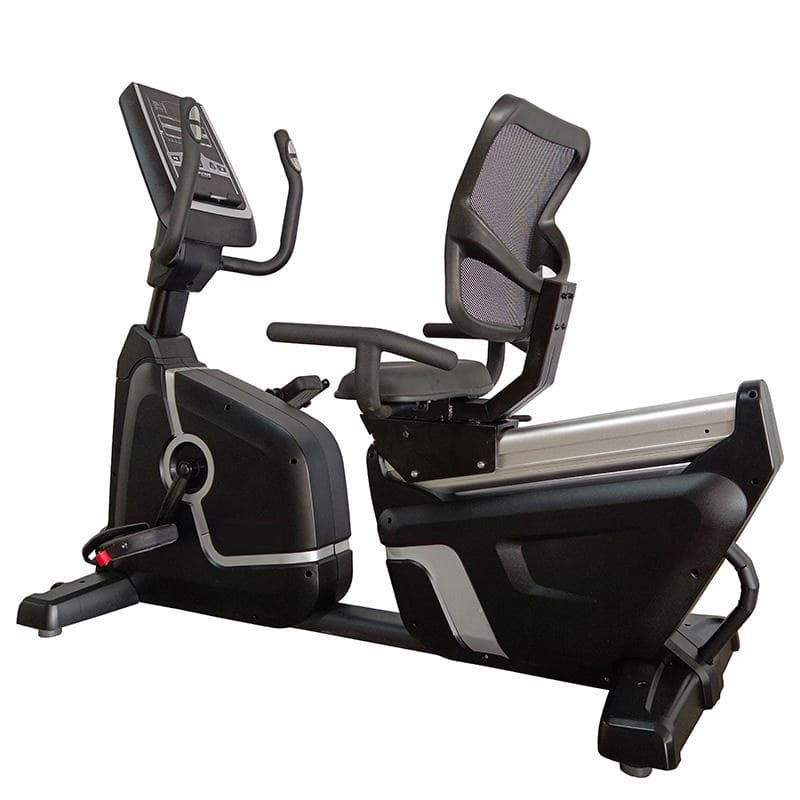
NewComfortGlide R500 Recumbent Exercise Bike
A supportive, low-impact recumbent bike. Back-supported seat, step-through frame and quiet magnetic resistance, kind to knees and backs.
£549.00inc. VATIn stock
Every UK retailer selling a commercial exercise bike uses the phrase, and almost none of them show you anything behind it. We publish ours: a 3,000 hour endurance test run with a 100 kg rider, a named laboratory, a named report number, and the parts it does not cover. The word has a formal meaning in exactly one place, the safety standard for stationary training equipment[1]. Its scope separates equipment for the training areas of organisations such as hotels, clubs, rehabilitation centres and studios, where access and control are regulated by the owner, from equipment for domestic use. That is the real line, and it is drawn on where a bike lives and who rides it, not on how it is advertised.
NewA supportive, low-impact recumbent bike. Back-supported seat, step-through frame and quiet magnetic resistance, kind to knees and backs.
 New
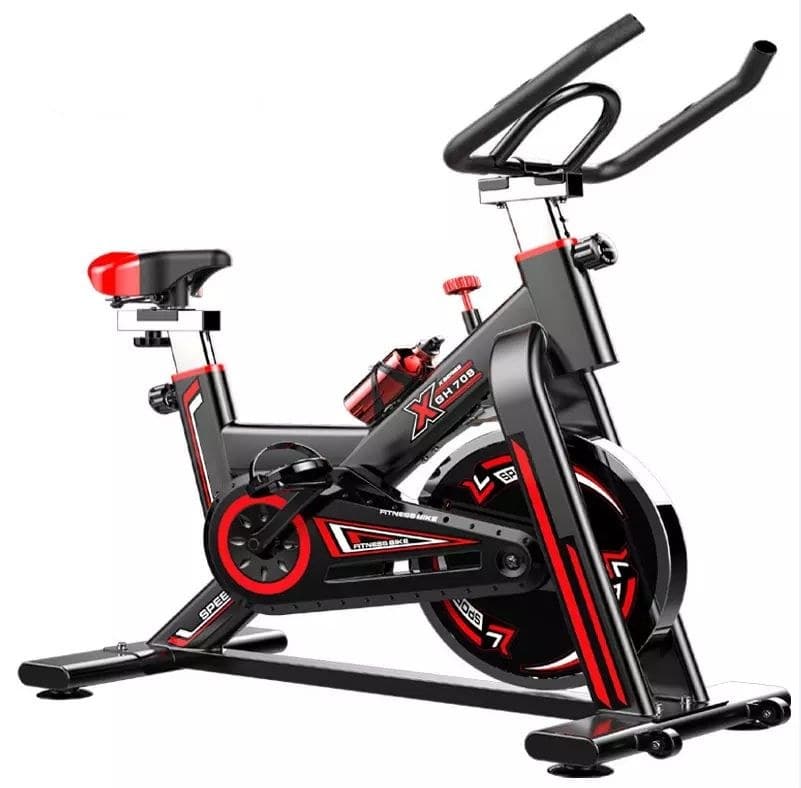
NewA studio-style indoor cycle for harder training. Weighted flywheel for a road-smooth feel, a phone mount, and micro-adjustable seat and bars.
The ComfortGlide R500 is the bike our supplier documents actually name, so it is the one this page can evidence. Prices include VAT, with free UK delivery and a 2 year warranty that covers commercial use. Buying more than one is an email rather than a basket: see below.
Where it lives and who controls access to it, not how heavy the frame is. That is the definition in the standard, and it is worth knowing because it is the only definition that exists.
The safety standard for stationary training equipment sorts machines by where they are used. On one side, training areas run by organisations: sport associations, educational establishments, hotels, sport halls, clubs, rehabilitation centres and studios, where access and control are specifically regulated by the owner. On the other, equipment for domestic use. A bike in a hotel gym and the same bike in a spare bedroom are doing measurably different jobs, because one of them is ridden by strangers all day and nobody is watching.
So the real question a gym exercise bike has to answer is not "is it sturdy". It is "how many hours, and under what load, and who checked". That is answerable with a document, which is what the rest of this page is.
On most product pages, nothing. "Commercial grade" is not a certification, it is not a class, and it is not measured by anyone. It is an adjective, and it is free.
We know because we went looking. Search "commercial grade exercise bike" and you will find the phrase everywhere and a number almost nowhere: no test hours, no laboratory, no report reference, no rider weight, no standard. Where a figure does appear, it is usually a round number in a blog post with nothing to trace it back to. It is not that these bikes are bad. It is that you are being asked to take the word on trust.
We would rather hand you the paperwork and let you judge it, including the bits that count against us. Everything below is either on a document we hold or is our own owner telling you what he found when he rode the thing. Where the two differ, we say so.
The honest answer, and the one we can evidence: 3,000 hours of continuous use with a 100 kg rider, tested and passed.
Here is the whole chain, so you can check it. Our ComfortGlide R500 is built for us by a fitness equipment manufacturer of eleven years' standing. It was tested by Shenzhen CTG Testing, an independent laboratory, under report CTG2411062017E_SR62ZI, which covers our bike's model number alongside two others in the same family. Testing ran from 20 May to 20 October 2024, which is 3,000 hours of continuous running almost to the day, with a 100 kg load on the bike throughout. The bike passed. The report names our exact model rather than gesturing at a range, so the paperwork is genuinely ours. We publish the report reference and the laboratory, and we keep the manufacturer's name and the model code to ourselves, because that is the part a competitor would use to copy the range rather than the part that tells you anything about the bike.
Now the three things that must travel with that number, every time.
First, the rider. The test was run with a 100 kg load, plus or minus 5 kg. It says so on the test sheet. That is a genuinely impressive result at that load, and it is evidence for that load and no more: it does not tell you how the bike behaves under a heavier rider, and we are not going to stretch it to say otherwise. Second, it was an entrustment test: the manufacturer commissioned it and supplied the sample. That is completely normal, it is still a genuine third-party test at an accredited laboratory, and it is not a surveillance audit of the production line. We are not going to imply it was. Third, the CTG report is against GB 17498.1-2008, the Chinese national standard, not EN ISO 20957. So it carries no European usage class, and we do not borrow one.
Then do the arithmetic, because 3,000 hours at 100 kg is not an abstract badge. Spread across two years it is a little over four hours a day, every single day. Across one year it is about eight. A hotel gym, a clinic or an office will not come close to that. A busy commercial floor with riders queuing will pass it, and at that point you are past what the document covers and into what we are willing to promise, which is a different thing and is covered further down.
There is a technical file against EN ISO 20957-1:2013 and EN 957-5:2009, reference TCF-04-00077-GPSD, and it puts the bike at accuracy Class B, the medium band, at clause 4.2.1. What there is not is a certified usage class, and that is the part most sellers would quietly leave out.
So let us be exact about it. The studio and commercial usage class is the one a gym buyer actually wants to see, and the only EN document we hold marks it "N" for the range our bike sits in. We do not hold that class. We are not going to write that we do, and if you see a UK retailer claiming a usage class, ask them for the certificate that grants it. What we can say is that the bike was built to commercial durability and tested for 3,000 hours with a 100 kg rider, which describes what was measured rather than borrowing a classification nobody awarded us. That is the line, and we are staying on our side of it.
Two more honest notes on the paperwork. The 2013 edition of the standard that our technical file is written against was withdrawn on 19 December 2024[1] and superseded by a 2024 edition[2]. That is normal for a file written in its day, and it is still worth knowing. And there is an ECM conformity mark, reference 3N210928.DXFQQ44, covering the model range our bike sits in. Read what that certificate says about itself: it was "issued on a voluntary basis", it is "our opinion", and "the manufacturer is responsible for the CE Marking process, and if necessary, must refer to a Notified Body". So there is a technical file and there is a conformity mark. There is not a Notified Body certification, and we will not tell you there is.
One last thing, on the laboratory itself, because "accredited" is another word that gets used loosely. CTG holds CNAS and ILAC-MRA accreditation, plus CMA 202219016330. That means something real: ILAC reports over 81,000 accredited laboratories worldwide[3] under the mutual recognition arrangement its signatories use to accept each other's results. It is not a certificate mill. But ILAC is also straight about the limit, and so are we: it says that even so, there is still no guarantee that those results will be accepted by other parties in a given market. An accredited test tells you the lab was competent to run it. It does not tell you a regulator has blessed the outcome.
For those three, yes, and they are the settings this bike genuinely fits. For a busy city centre gym running bikes all day, honestly, no, and we would rather say it here than take the order.
The reason is the arithmetic above. A hotel gym with a handful of guests a day, a physio clinic running steady seated sessions, an office with a bike people use at lunch: none of those get near four hours a day of continuous riding, so the evidence we hold comfortably covers how you would actually use it. The step-through frame and the supported seat also matter more in those rooms than they do in a studio, because your riders are not athletes and some of them will not be able to climb onto an upright bike at all.
Our owner Asif rode it and, unprompted, said it suits a gym owner. His notes are first-hand rather than a lab test, and we label them that way: the display is a typical gym level display with a lot of features, the resistance is, in his word, super, and he could sleep in the seat. That last one matters for a clinic, where somebody may be on it for a while. He also spent 90 minutes assembling it and measured it at about 4 feet by 6 feet with room to move around, so budget the floor and the afternoon.
If your riders want to train out of the saddle, the Studio Pro S3 is the other one worth a look at £279. Asif's note on it was that the seat feels like the gym, it has an 11 kg flywheel, and it is stable when you get out of the saddle. Be straight about its paperwork though: the endurance report above covers the R500, not the S3, so all of that evidence belongs to the recumbent and not to the spin bike. Different bike, different documents, and we are not going to blur them.
And the thing we do not sell: a £3,000 chain-gym machine with a fifteen year frame warranty and a service contract. If that is what you need, buy that. What we have is a £549 bike with its test report published, which for the right room is a considerably better deal than an unevidenced badge at twice the price.
£549.00 including VAT for the ComfortGlide R500, £279.00 for the Studio Pro S3, with free UK delivery on both. To buy more than one, email us, because a trade order is a conversation rather than a basket.
We will be straight about why: our checkout is still coming soon, and even when it lands, a gym buying four bikes wants an invoice, not instalments. So the route today is email. Tell us which bike, how many, and the delivery postcode, and we will come back to you.
On the warranty, which is the question a gym owner should ask before any of the above. Every bike carries a 2 year warranty covering parts and labour, and it covers commercial use on the same terms as domestic, with no cap on hours. That is unusual, and we want to be honest about what it is: it is a promise we are making, not a conclusion from the test report. The 3,000 hours at 100 kg is what was measured. The warranty is what we will stand behind. Those are two separate things and we are not going to let one dress up as the other.
Two limits worth knowing before you order. Bikes ship to your door part-assembled, with the tools in the box, and you build them: we do not offer in-home setup, and the R500 took our owner 90 minutes. And if you are buying as a business rather than as a consumer, the 14 day right to cancel under the Consumer Contracts Regulations does not apply to you, because it is a consumer right. Ask us about returns as part of the enquiry rather than assuming the consumer terms carry over.
| What a buyer asks | What we can show | The limit of it |
|---|---|---|
| How long does it last? | 3,000 hours of continuous use, tested and passed, with a 100 kg rider | The test load was 100 kg, plus or minus 5. It is evidence for that load, not for a heavier rider, and not for a multi-rider gym floor. |
| Who tested it? | Shenzhen CTG Testing, report CTG2411062017E_SR62ZI, 20 May to 20 October 2024, covering our model and two others in the same family | An entrustment test: the manufacturer commissioned it and supplied the sample. Genuinely third-party, but not a surveillance audit. |
| Is the laboratory accredited? | CNAS and ILAC-MRA accredited, plus CMA 202219016330 | Accreditation covers the lab's competence to run the test. ILAC itself says it is no guarantee a given market accepts the result. |
| Against which standard? | GB 17498.1-2008, the Chinese national standard | Not EN ISO 20957, so the endurance report carries no European usage class. |
| Is there EN paperwork? | A technical file against EN ISO 20957-1:2013 and EN 957-5:2009 (TCF-04-00077-GPSD), accuracy Class B (medium) | The 2013 edition was withdrawn in December 2024, and the file does not declare a usage class for our bike. |
| Is it certified for studio and commercial use? | No. We do not hold that usage class and we do not claim it. | The only EN document we hold marks that class as N for the range our bike sits in. Ask any retailer claiming a class to show the certificate that grants it. |
| Is it CE certified by a Notified Body? | There is an ECM conformity mark, 3N210928.DXFQQ44, covering the model range our bike sits in | The certificate says of itself that it was issued on a voluntary basis and is an opinion, and that the manufacturer must refer to a Notified Body if one is needed. |
| What is the maximum user weight? | 150 kg, as published on the product page | That is what the manufacturer's paperwork supports. We do not publish a higher figure without a spec sheet behind it. |
Every bike we stock, side by side. All prices include VAT.
| Model | Type | Resistance | Max user weight | Folds | Price | |
|---|---|---|---|---|---|---|
| FoldFit X1 Folding Exercise Bike | Folding | Magnetic, 16 levels | 120 kg | Yes | £179.99 | View bike |
| CityRide U2 Upright Exercise Bike | Upright | Magnetic | 120 kg | Yes | £149.99 | View bike |
| Studio Pro S3 Indoor Spin Bike | Spin | Weighted flywheel | 150 kg | No | £279.00 | View bike |
| DeskFit Mini Pedal Exerciser | Mini pedal | Adjustable knob | To be confirmed | Yes | £59.99 | View bike |
| ComfortGlide R500 Recumbent Exercise Bike | Recumbent | Magnetic | 150 kg | No | £549.00 | View bike |
| AirStorm A1 Air Bike | Air | Air / fan, unlimited | 150 kg | No | £449.00 | View bike |
All prices include VAT. Max user weight is taken from the supplier specification. Where a figure still reads "To be confirmed", we will publish it as soon as the supplier confirms it.