Exercise bike for bad knees: what NICE and the NHS actually say
If your knee pain is osteoarthritis, exercise is not off the table: it is the starting point. NICE, which sets treatment standards for the NHS, says therapeutic exercise is a core treatment for osteoarthritis, offered to all people who have it[1]. But "bad knees" is not one thing. The NHS lists at least nine different causes of knee pain, and a bike suits some of them and is the wrong idea for others. We sell exercise bikes, we are not doctors, so this guide sets out what NICE and the NHS actually say, and points you to the right person for your knee.
Written by the Exercise Bike team. We describe what NICE and the NHS say, we do not give medical advice. Updated 17 July 2026.
Contents
Key facts
Gentle, seated movement
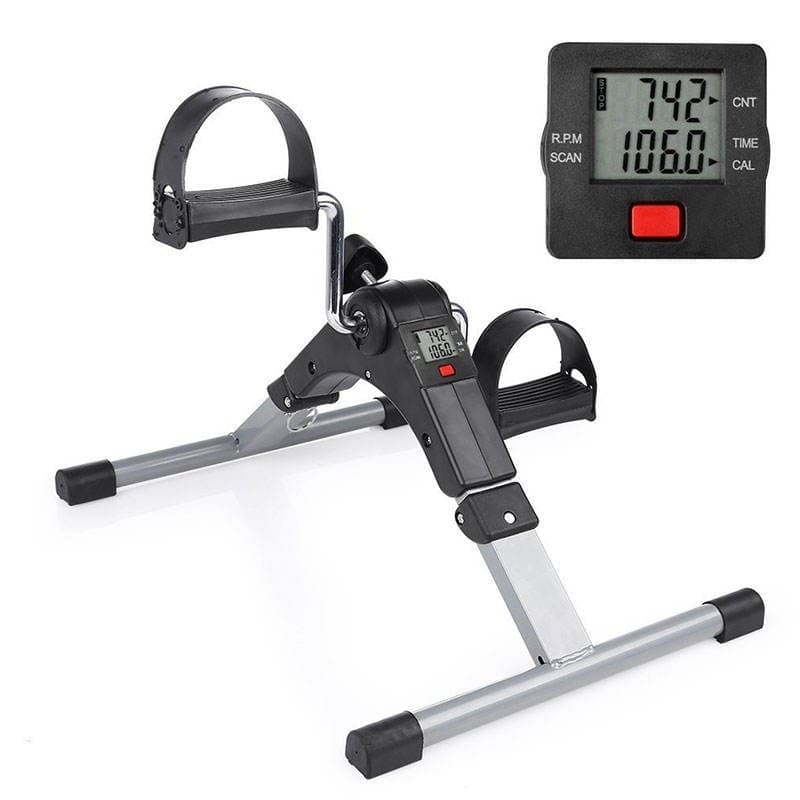
For pedalling from a chair with no bike to climb onto, the DeskFit Mini sits on the floor in front of you.
See mini pedal exercisersKey takeaways
- 1Whether a bike helps depends on the cause: NICE recommends exercise for osteoarthritis, but the NHS says to rest a sudden injury[2].
- 2The NHS lists at least nine different causes of knee pain, and a website cannot tell you which one you have[2].
- 3For osteoarthritis, NICE says joint pain may increase at first, but consistent exercise is beneficial for the joints over time[1].
- 4Call NHS 111 now if your knee is very painful, cannot bear weight, is badly swollen, locks, gives way, or is hot with a high temperature.
- 5A recumbent bike or a mini pedal exerciser suit a gentle, seated ride. A spin bike, built to be ridden hard, does not.
Are exercise bikes good for bad knees?
It depends on the cause of your knee pain, and that honest answer is the whole point of this page. For osteoarthritis, NICE names therapeutic exercise, including general aerobic fitness, as a core treatment offered to all people with the condition[1]. For a sudden injury the NHS says the opposite: put as little weight as possible on your knee[2]. Both are right, because they describe different situations. Working out which one you have is the first thing to do, and it is a job for a GP or a physiotherapist, not for a shop.
One question, two opposite answers
A sudden injury
The NHS says to put as little weight as possible on the knee[2], and to get it looked at.
Osteoarthritis
NICE names therapeutic exercise, including general aerobic fitness, a core treatment offered to all people with the condition[1].
Which of these is yours is the first thing to find out, and that is a job for a GP or a physiotherapist, not for a shop.
Nobody in the search results for this question makes that distinction. They tell you a bike is low-impact and leave it there. Low-impact is true, and it is not the whole answer.
What kind of "bad knee" do you actually have?
This is the part every buying guide skips. The NHS lists at least nine different causes of knee pain[2], and they are not the same problem with the same answer:
- Osteoarthritis, the longer-term wear the rest of this page is mostly about.
- Sprains and strains.
- Tendonitis.
- A torn ligament or a torn meniscus.
- Cartilage damage.
- A dislocated kneecap.
- Bursitis.
- Bleeding in the joint.
- Gout, or the more urgent septic arthritis.
This list is not a diagnosis. You cannot tell these problems apart from a website. The NHS is blunt about it: do not self-diagnose, and see a GP if you are worried[2]. In many areas you can also refer yourself to an NHS musculoskeletal service without going through a GP first.
Osteoarthritis is the one where a bike has the strongest case, and even that is a clinician's call. NICE says it is diagnosed in people aged 45 or over with activity-related joint pain and any morning stiffness lasting no longer than 30 minutes[1], but that is for a professional to confirm, not a checklist to score yourself against.
Will cycling make my knees worse?
This is the fear the whole internet dances around, and for osteoarthritis NICE answers it directly. It says that joint pain may increase when you start therapeutic exercise, and that doing regular and consistent exercise, even though this may initially cause pain or discomfort, will be beneficial for your joints[1]. NICE adds that sticking with an exercise plan over the long term increases the benefit, by reducing pain and improving how the joint works.
Read the scope carefully, because it matters. That is NICE's guidance on osteoarthritis, and only osteoarthritis. It does not apply to a fresh injury, a torn ligament or a knee you are recovering from surgery on. NICE names general aerobic fitness as part of the exercise it means, and an exercise bike is one low-impact way to do aerobic exercise at home, but whether it is right for your knee is a question for your GP or physiotherapist.
When should you not get on the bike?
Some knee pain needs looking at, not exercising.
Call NHS 111 now if your knee is very painful, you cannot move it or put weight on it, it is badly swollen or has changed shape, it locks or gives way, or it is hot and red and you have a very high temperature[2], which can be a sign of infection.
If any of those describe your knee, this is not the moment to buy a bike. Call 111 or see a GP. A painless click on its own is normal, according to the NHS. Pain, locking, giving way or heat with a temperature is not, and it is worth getting checked.
What kind of bike is best for bad knees?
If you and a physiotherapist have decided a bike is right for you, the type matters. What you are usually after is a seated, low-impact ride you get onto easily. In our range that points at two bikes.
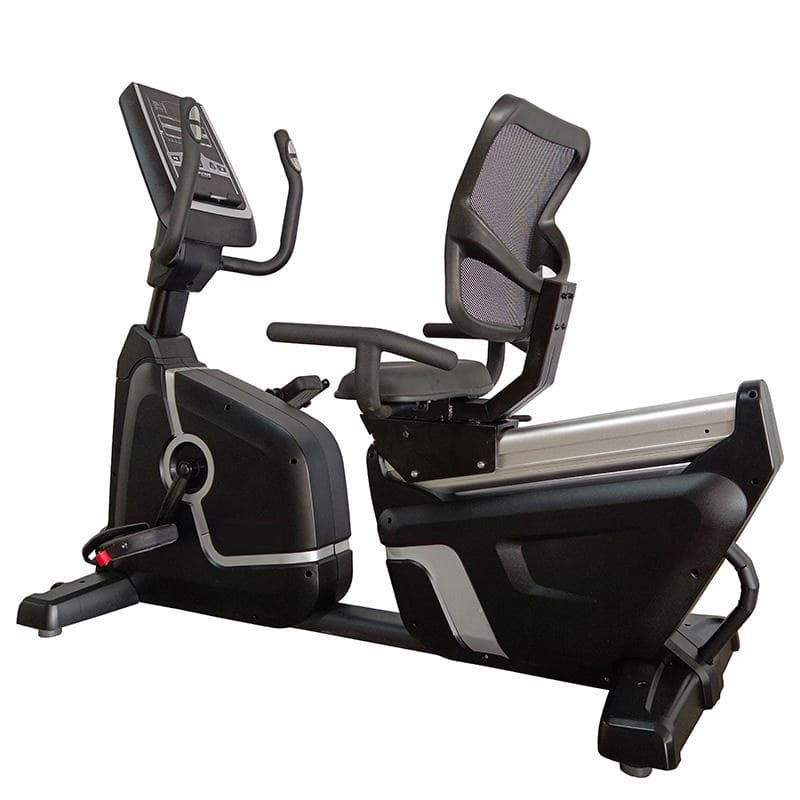
A recumbent bike comes first: you sit back against a backrest with the pedals in front of you, and you step through the frame rather than swinging a leg over it. That is the ComfortGlide R500 for us. If you want the format rather than the single model, browse seated recumbent bikes.
For gentle movement while you sit, a mini pedal exerciser needs no bike to climb onto at all: it sits on the floor and you pedal from a chair. Ours is the DeskFit Mini, and there are more under-desk pedal exercisers on their own page.
The one to be careful with is a spin bike. It is built to be ridden hard and out of the saddle, which is the opposite of a gentle seated ride. It is a fine machine, it is just not the tool this page is about. We can tell you what each bike does; what your knee needs is a conversation for your physiotherapist.
Is 30 minutes on a bike the same as 30 minutes of walking?
Not the same, and the difference is the whole reason someone with a sore knee asks. Cycling is low-impact and seated, so it keeps the load off your joints. Walking carries your full body weight, which does more to strengthen bone but also asks more of the knee itself.
Neither is simply better. Which one suits you depends on what you are trying to protect and what you are trying to build, and that is worth raising with a physiotherapist. For what a bike does and does not do in general, our guide to what an exercise bike is good for goes further.
Does losing weight help?
For osteoarthritis, NICE says that any amount of weight loss is likely to be beneficial, and that losing 10% of your body weight is likely to be better than 5%[1]. That is NICE's guidance on osteoarthritis, not a promise about a bike. If weight is one of the things you are working on, our exercise bike and weight loss guide covers it properly, without the before-and-after nonsense.
Exercise bikes and bad knees, questions answered
Are exercise bikes good for knee problems?
What kind of bike is best for bad knees?
Is 30 minutes on a stationary bike the same as 30 minutes of walking?
What exercises should you not do with bad knees?
Can you cycle with osteoarthritis in the knee?
Should you rest or exercise a painful knee?
Sources
- NICE NG226: Osteoarthritis in over 16s: diagnosis and management (published 19 October 2022)
- NHS: Knee pain (last reviewed 21 December 2023)
This guide describes what NICE and the NHS say. It is not medical advice. For advice about your own knee, see a GP or a physiotherapist, or call NHS 111. In an emergency, call 999.