Exercise bike benefits: what riding one actually does for you
The benefits of an exercise bike are straightforward: it builds heart and lung fitness, it works your legs, and it does both with very little impact on your joints. Moving at all is the point, and it counts: the World Health Organization reports that people who are insufficiently active have a 20% to 30% increased risk of death compared with people who are sufficiently active[1]. This guide is honest about what an exercise bike does well, what it does not do, and which type suits which benefit.
Written by the Exercise Bike team. Our owner Asif rode all five bikes we sell. Updated 16 July 2026.
Contents
Key facts
Movement through the day
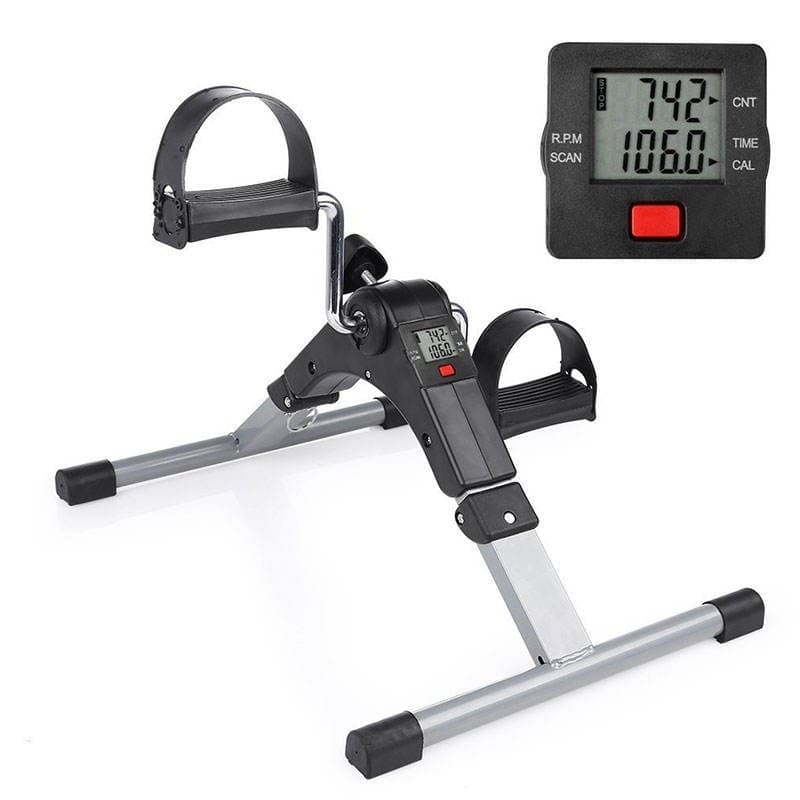
Not everyone wants a dedicated workout. The DeskFit Mini pedals quietly under a desk while you work.
See mini pedal exercisersKey takeaways
- 1An exercise bike builds heart and lung fitness with very little impact on your joints.
- 2People who are insufficiently active have a 20% to 30% higher risk of death than people who are sufficiently active[1].
- 3A systematic review found indoor cycling improved VO2max by 8% to 10.5%, though the authors rate the evidence as very low quality[2].
- 4It works your legs and burns calories, but it is not a whole-body workout and you cannot spot-reduce fat from one area.
- 5A recumbent suits comfort, a folding bike suits a small home, and a mini pedal exerciser suits a desk.
What are the benefits of an exercise bike?
An exercise bike builds heart and lung fitness, strengthens your legs, burns calories, and does it with very little impact on your joints. The practical benefit matters just as much: it lives in your home, so there is no weather, no travel and no gym membership standing between you and a ride. A bike you can reach in ten seconds is a bike you will use.
Each benefit points at a different bike, so it is worth knowing which one you are buying for.
| Benefit | What it actually means | Which bike suits it |
|---|---|---|
| Heart and lung fitness | Regular riding raises your aerobic fitness over weeks | Any bike, or a spin bike to train hard |
| Low impact | Smooth pedalling, none of the pounding of running | Recumbent, for a seated, back-supported ride |
| Fits a small home | Folds away between rides instead of filling a room | Folding |
| Movement through the day | Gentle pedalling while you work or watch television | Mini pedal exerciser |
| Convenience | No weather, no travel, no gym queue | Any bike |
Is riding an exercise bike good exercise?
Yes, riding an exercise bike is genuine exercise. It raises your heart rate, works the large muscles in your legs, and improves aerobic fitness over time. A systematic review of indoor cycling found that riding 2 to 3 days a week improved VO2max, a core measure of fitness, by 8 to 10.5%[2] across 13 studies. Read that as encouraging rather than settled: the authors rate the quality of the evidence as very low, because most of the studies had no control group. We would rather tell you that than quote the number and stop.
The bigger picture is not in doubt, and it is why any of this matters. The WHO expects the share of adults not doing enough activity to rise to 35% by 2030[1] if the current trend holds. A bike in the corner of a room is one small answer to that.
What is an exercise bike good for?
An exercise bike is good for steady cardio, leg strength, burning calories and building a regular habit at home. It is not a whole-body machine: your legs do most of the work, your core steadies you, and your upper body does very little. That is worth knowing before you buy.
- Good for: steady daily cardio you can do while watching television.
- Good for: quads, hamstrings, glutes and calves, the big muscles in your legs.
- Good for: burning calories as part of losing weight, alongside what you eat.
- Look elsewhere if: you want an upper-body workout, or you want the bone-loading that comes from weight-bearing exercise like walking or running.
On weight, keep it in proportion: a bike burns calories, and losing weight comes from a calorie deficit rather than from any one machine. Our exercise bikes and weight loss guide covers that properly. If sore knees are the reason you are looking at a bike, we go into it far more carefully in our guide to exercise bikes and bad knees.
We do not give medical advice. If you are managing a condition or recovering from an injury, speak to your GP or a physiotherapist before you start.
What are the benefits of a recumbent exercise bike?
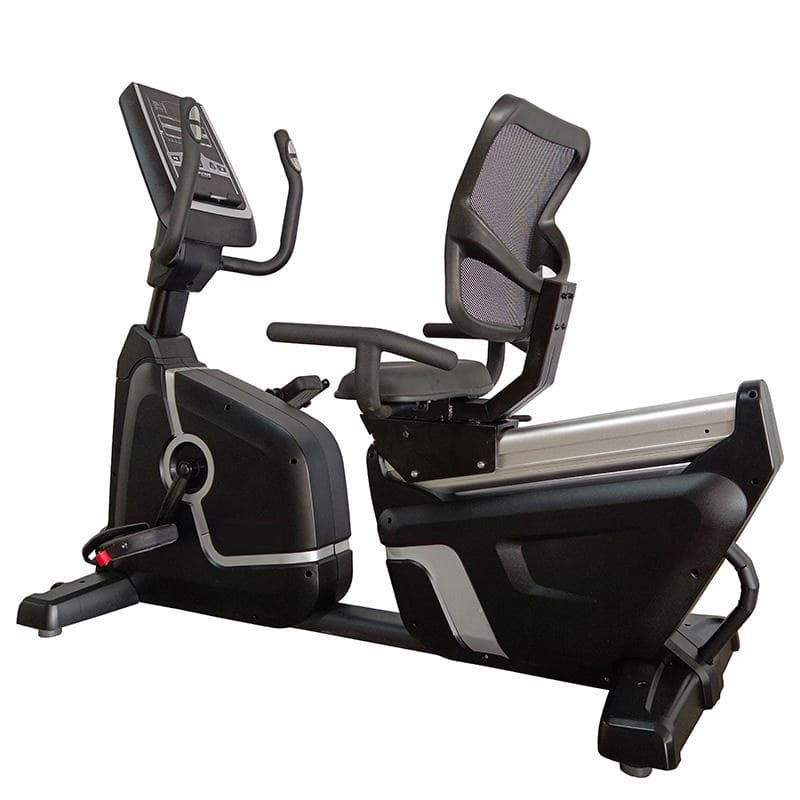
A recumbent exercise bike supports your back and puts you in a reclined, seated position with a step-through frame. You step in rather than climb on, and the seat has a proper backrest. The benefit is comfort, and comfort is what makes a longer ride something you will actually finish.
Our first-hand take, from our own testing rather than a study: Asif rode our ComfortGlide R500 and said he could sleep in the seat, and that you can customise everything about the riding position. The surprise was that a comfortable seat does not mean an easy ride: he found the resistance brutal. A reclined bike can still train you hard. Browse seated recumbent bikes if that is the ride you want.
Does an exercise bike help your stomach?
An exercise bike helps your stomach indirectly. Cycling works your legs most, while your core does some steadying work, so it is not an abdominal machine. What it does do is burn calories, and a flatter stomach comes from losing fat overall through a calorie deficit, not from working one area. You cannot spot-reduce, whatever a video promises.
Which exercise bike gives you which benefit?
Match the bike to the benefit you actually want, not to the longest feature list. Three quick routes cover most people.
- Want comfort and a supported, low-impact ride: a recumbent bike, where you sit back with a backrest.
- Want the bike gone between rides: a folding bike, which stands behind a door.
- Want to keep moving through a sitting day: a mini pedal exerciser under the desk.
For the desk option, Asif found the little DeskFit Mini the genuine surprise of our range, in a good way: it is silent, it does not slide on the floor, and it fits under a normal desk. See more under-desk pedal exercisers, or space-saving bikes if the room is the problem. Everything we sell is in the home exercise bikes range, with free UK delivery.
Exercise bike benefits, questions answered
What are the benefits of an exercise bike?
Is riding an exercise bike good exercise?
What is an exercise bike good for?
What are the benefits of a recumbent exercise bike?
Does an exercise bike help your stomach?
Sources
- World Health Organization: Physical activity fact sheet
- Chavarrias et al, Health Benefits of Indoor Cycling: A Systematic Review (Medicina, 2019). The authors rate the quality of the evidence as very low.
Riding impressions on this page are our own first-hand notes from testing the bikes we sell, not a clinical study.