 Best sellerNew
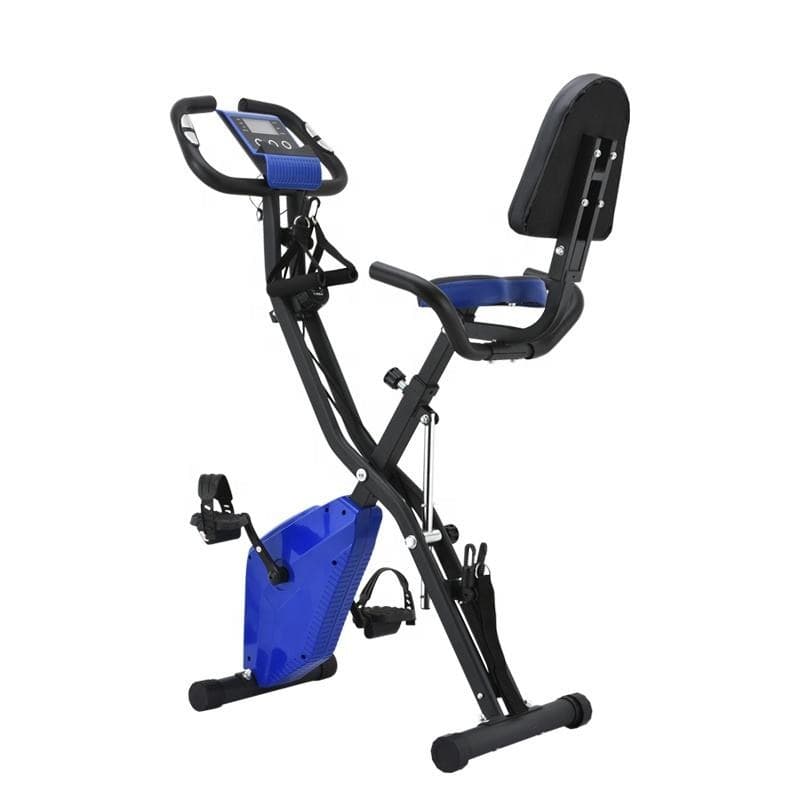
FoldFit X1 Folding Exercise Bike
A full workout that folds flat. Quiet 16 level magnetic resistance, an easy-read display, and a frame that tucks behind a door when you are done.
£179.99inc. VATIn stock
A magnetic exercise bike makes resistance with magnets instead of a brake pad. They sit either side of a spinning metal flywheel and never touch it, so there is nothing to rub, nothing to wear out, and almost nothing to hear. Three of our five bikes work this way. This page explains the mechanism, untangles "magnetic vs flywheel" (which is not the choice it sounds like), and tells you what we found when we actually rode them, including where magnetic resistance falls short.
 Best sellerNew
A full workout that folds flat. Quiet 16 level magnetic resistance, an easy-read display, and a frame that tucks behind a door when you are done.
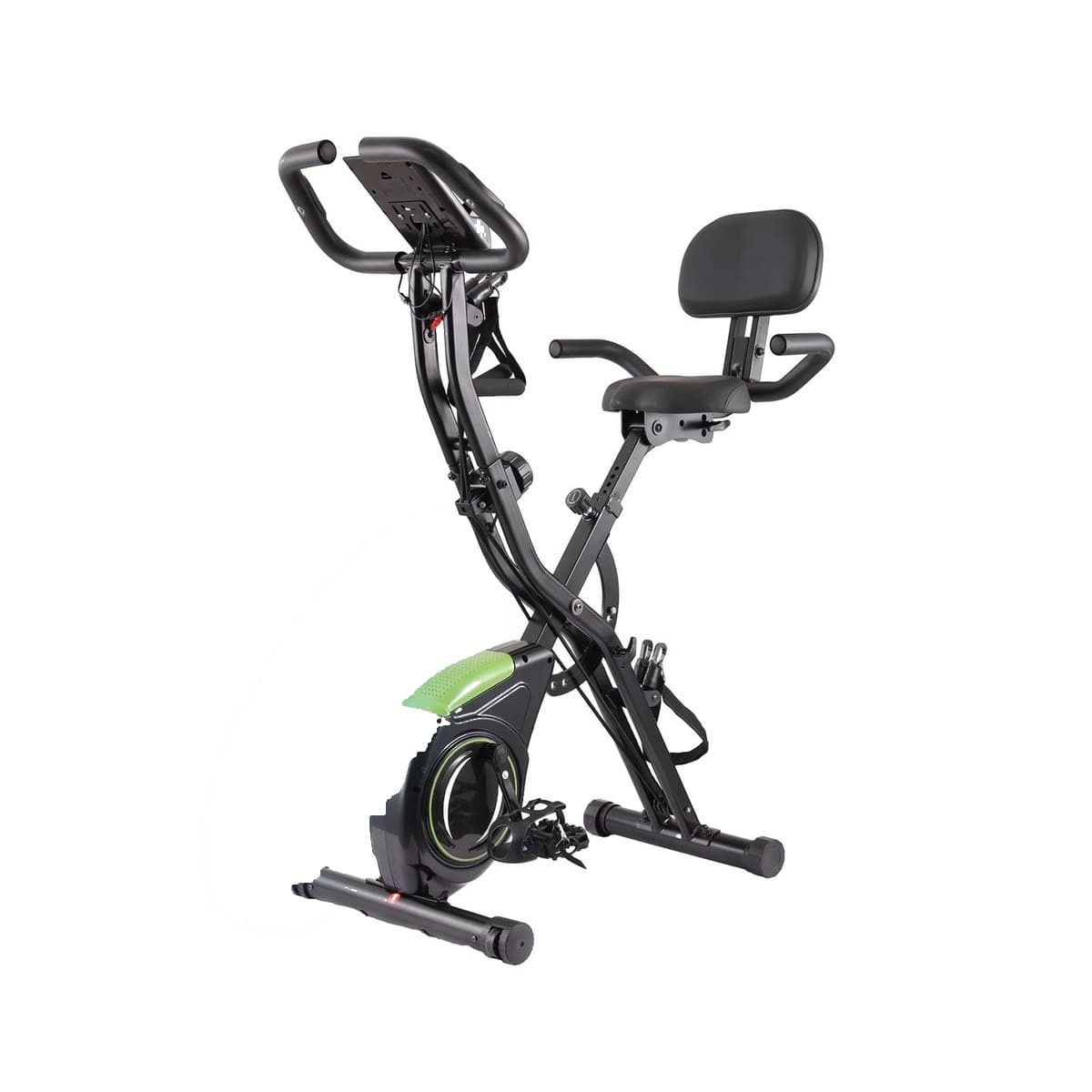
NewA compact upright bike for steady home cardio. Smooth magnetic resistance, an adjustable seat, and a small footprint that fits a spare room or corner.
 New
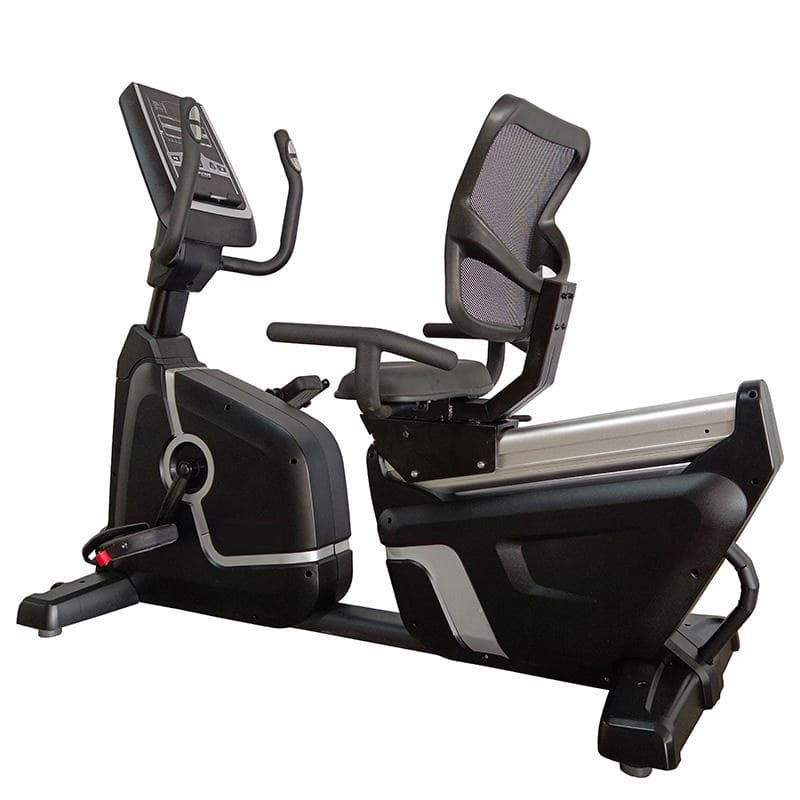
NewA supportive, low-impact recumbent bike. Back-supported seat, step-through frame and quiet magnetic resistance, kind to knees and backs.
The FoldFit X1 has 16 magnetic levels, the CityRide U2 runs 1 to 15, and the ComfortGlide R500 is magnetic too. Prices include VAT, with free UK delivery. You can spread the cost with interest-free instalments with Klarna or Clearpay, subject to status.
A magnetic exercise bike uses magnets to slow a spinning metal flywheel, without ever touching it. As the flywheel passes through the magnetic field it induces small circular currents in the metal, called eddy currents, and those currents drag against the wheel. Move the magnets closer and the drag increases, so pedalling gets harder. Move them away and it eases off.
That is not marketing language, it is the engineering. The patent literature for magnetic ergometers describes it plainly: the magnets and the rotating member together generate eddy currents which slow the rotating member down[1] (European patent EP1040852A2). The important word in all of that is "without touching". Everything people like about these bikes follows from it.
Friction resistance presses a pad or a band against the flywheel. Magnetic resistance never makes contact. That one difference explains the noise, the wear and the servicing, and it is why magnetic has taken over the home market.
The same patent is blunt about the comparison: an eddy-current brake functions very smoothly and silently compared with a braking band[1], while a friction arrangement is "relatively loud". Worth knowing what magnetic gives up in exchange: a friction knob changes the moment you turn it, whereas magnetic resistance moves in fixed steps and can feel a beat behind your hand.
These are not two options you pick between, which is why the comparison never quite makes sense. The flywheel is the spinning mass. Magnetic resistance is how you slow that mass down. Most magnetic bikes have a flywheel as well.
Our own range proves it. The CityRide U2 is magnetic and has a 3 kg flywheel. The Studio Pro S3 has an 11 kg flywheel. So there are really two separate questions: how is the resistance applied (magnets, or a pad), and how much mass is spinning (which decides how smooth and road-like the pedal stroke feels, not how hard the bike can get).
Now the awkward part, and we would rather say it than quietly skip the question on a page with "flywheel" in the heading. The FoldFit X1 is magnetic with 16 levels, but its manufacturer does not publish a flywheel weight. The manual gives the resistance type and no mass. We are not going to invent one, and we are not going to imply we know. The Studio Pro S3's 11 kg is published, so we print it. For the same reason we do not describe the Studio Pro S3 as magnetic or as friction: its maker does not state the resistance type, so neither do we.
Yes, and this is the one claim on this page we did not take on trust. Quiet is the whole selling point of magnetic resistance, and every listing repeats it, so our owner Asif rode all five of ours and wrote down what he heard. These are his own first-hand notes, not a lab measurement.
On the FoldFit X1: no noise at all. On the ComfortGlide R500: none at all. On the CityRide U2: surprisingly quiet even at high speed, which is the point at which a friction bike would be making itself known. So the claim holds up on our bikes. You can ride any of the three with the television on and win the argument about it.
One honest complication, because it would be easy to leave out. The Studio Pro S3, which is our weighted-flywheel bike rather than one of the magnetic three, was also quiet. Quiet is not magnetic's private property. What magnetic reliably gives you is quiet with nothing rubbing, which is also why there is no pad to replace.
That depends on the bike, not on the mechanism. This is the most useful thing we can tell you, and it came out of riding two magnetic bikes back to back.
On the FoldFit X1, Asif found that up to about level 10 he could not feel much, and at level 16 he nearly died. It genuinely bites at the top. On the CityRide U2, which runs 1 to 15, he found it smoother and said that even at level 15 you will not feel the pain: he was expecting a slap in the face at the top of the range and did not get one.
Same mechanism, two different bikes, two genuinely different ceilings. So do not buy on the word "magnetic", and do not buy on the number of levels either, because level 15 on one bike is not level 15 on another. If you want resistance that fights back, the FoldFit X1 is the magnetic one that does it, and a studio bike with a heavy flywheel is the other route. If you want steady, comfortable cardio you can do daily, the CityRide U2's gentler top end is a feature rather than a fault.
Three of the five: the FoldFit X1 (16 levels), the CityRide U2 (1 to 15) and the ComfortGlide R500. The DeskFit Mini uses a manual resistance knob, and the Studio Pro S3 is the weighted-flywheel bike whose resistance type its maker does not state.
Resistance is only one axis, though. It does not tell you what shape of bike you want. If the room is the constraint, look at foldable exercise bikes. If you want a plain, familiar riding position, look at classic upright bikes. Or see all five bikes together and compare them properly.
| Magnetic resistance | Friction resistance | |
|---|---|---|
| How it works | Magnets drag on a spinning flywheel without touching it | A pad or band presses against the flywheel |
| Noise | Near-silent | Relatively loud |
| Wear and servicing | Nothing is in contact, so there is no pad to replace | The pad wears down and is a consumable |
| Adjusting it | Magnets move closer or further, usually in numbered levels | Changes the instant you turn the knob |
| In our range | FoldFit X1, CityRide U2, ComfortGlide R500 | None that we know of. The Studio Pro S3's maker does not state its resistance type, so we do not guess |
Every bike we stock, side by side. All prices include VAT.
| Model | Type | Resistance | Max user weight | Folds | Price | |
|---|---|---|---|---|---|---|
| FoldFit X1 Folding Exercise Bike | Folding | Magnetic, 16 levels | 120 kg | Yes | £179.99 | View bike |
| CityRide U2 Upright Exercise Bike | Upright | Magnetic | 120 kg | Yes | £149.99 | View bike |
| Studio Pro S3 Indoor Spin Bike | Spin | Weighted flywheel | 150 kg | No | £279.00 | View bike |
| DeskFit Mini Pedal Exerciser | Mini pedal | Adjustable knob | To be confirmed | Yes | £59.99 | View bike |
| ComfortGlide R500 Recumbent Exercise Bike | Recumbent | Magnetic | 150 kg | No | £549.00 | View bike |
| AirStorm A1 Air Bike | Air | Air / fan, unlimited | 150 kg | No | £449.00 | View bike |
All prices include VAT. Max user weight is taken from the supplier specification. Where a figure still reads "To be confirmed", we will publish it as soon as the supplier confirms it.