How long on an exercise bike? Less than you think
The honest answer to "how long should I ride" is shorter than most pages dare to say. A 2011 study in The Lancet followed 416,175 people for about eight years and found that the group who exercised about 15 minutes a day, an average of 92 minutes a week, had a 14% lower risk of death from any cause and about three years longer life expectancy than the group who did nothing[1]. It is an observational study, so it shows an association rather than proof, and its authors put it no more strongly than exercise at that level "might be of benefit". But if your real question is "am I doing enough?", the evidence says the bar is lower than you fear. This guide covers how long and how often, honestly.
Written by the Exercise Bike team. We describe what the research found, we do not give medical advice. Published 19 July 2026.
Contents
Key facts
Little and often
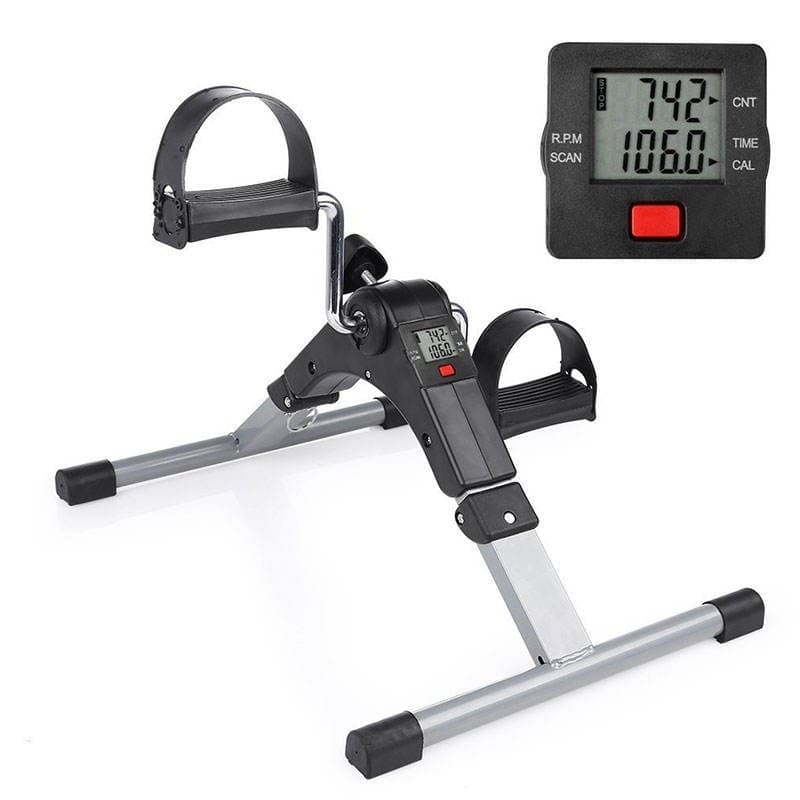
The DeskFit Mini pedals under a desk, so short sessions happen without planning them.
See the DeskFit MiniKey takeaways
- 1About 15 minutes a day was linked to a 14% lower risk of death and about 3 years longer life in a 2011 Lancet cohort of 416,175 people[1].
- 2Every extra 15 minutes a day beyond that was associated with a further 4% reduction[1], so more helps, but the biggest step is starting.
- 3Doing nothing carried a 17% higher mortality risk than that first 15-minute habit[1].
- 4It is an observational study from 2011, in a Taiwanese population: an association, not proof, and its authors say "might be of benefit", so we do too.
- 5Beginners: start with 10 to 15 easy minutes and build up. Short rides are not a token effort, they are the effective starting dose.
How long should you spend on an exercise bike?
About 15 minutes a day is where the measurable benefit began in the largest study on this question, and that is the honest headline. The 2011 Lancet cohort followed 416,175 people in Taiwan for an average of eight years. Its low-volume group exercised an average of 92 minutes a week, roughly 15 minutes a day, and had a 14% lower risk of death from any cause and about three years longer life expectancy than the inactive group[1]. The paper has been cited more than 1,100 times since.
Two more findings complete the picture. Doing nothing was not neutral: the inactive group carried a 17% higher mortality risk than the low-volume group[1]. And beyond the first 15 minutes, every extra 15 minutes a day was associated with a further 4% reduction in all-cause mortality[1], so more kept helping, in smaller steps. The shape of that curve is the whole message of this page: the biggest single gain is the step from nothing to something.
What this study is, and is not. It is an observational cohort from 2011, in a Taiwanese population: it followed real people over years and measured associations, which is not the same as a trial proving cause. Its authors put the conclusion carefully, that 15 minutes a day "might be of benefit", and we will not put it more strongly than they did.
Is 20 minutes a day on a stationary bike enough?
Yes, meaningfully so. Twenty minutes a day sits above the roughly 15 minutes that the Lancet cohort linked to lower mortality, and into the zone where each additional 15 minutes a day was associated with a further 4% reduction in risk[1]. In plain terms: a 20-minute daily ride is not a warm-up for the real exercise you are failing to do. On the best evidence available, it is the real exercise.
What matters more than the exact number is that the minutes actually happen. A ride you do most days at a pace you can hold beats a longer plan you quietly abandon in week three. If you want structure for those 20 minutes, our beginner bike sessions give the minutes a shape without turning them into a project.
Is 1 hour on a stationary bike enough?
More than enough for most goals, and here is the honest part: longer is not automatically better. The Lancet cohort's dose-response curve rose steepest at the start, from nothing to 15 minutes a day, and then climbed in smaller 4% steps for each extra 15 minutes[1]. An hour a day is well up that curve, but the second half of that hour buys less than the first fifteen minutes did.
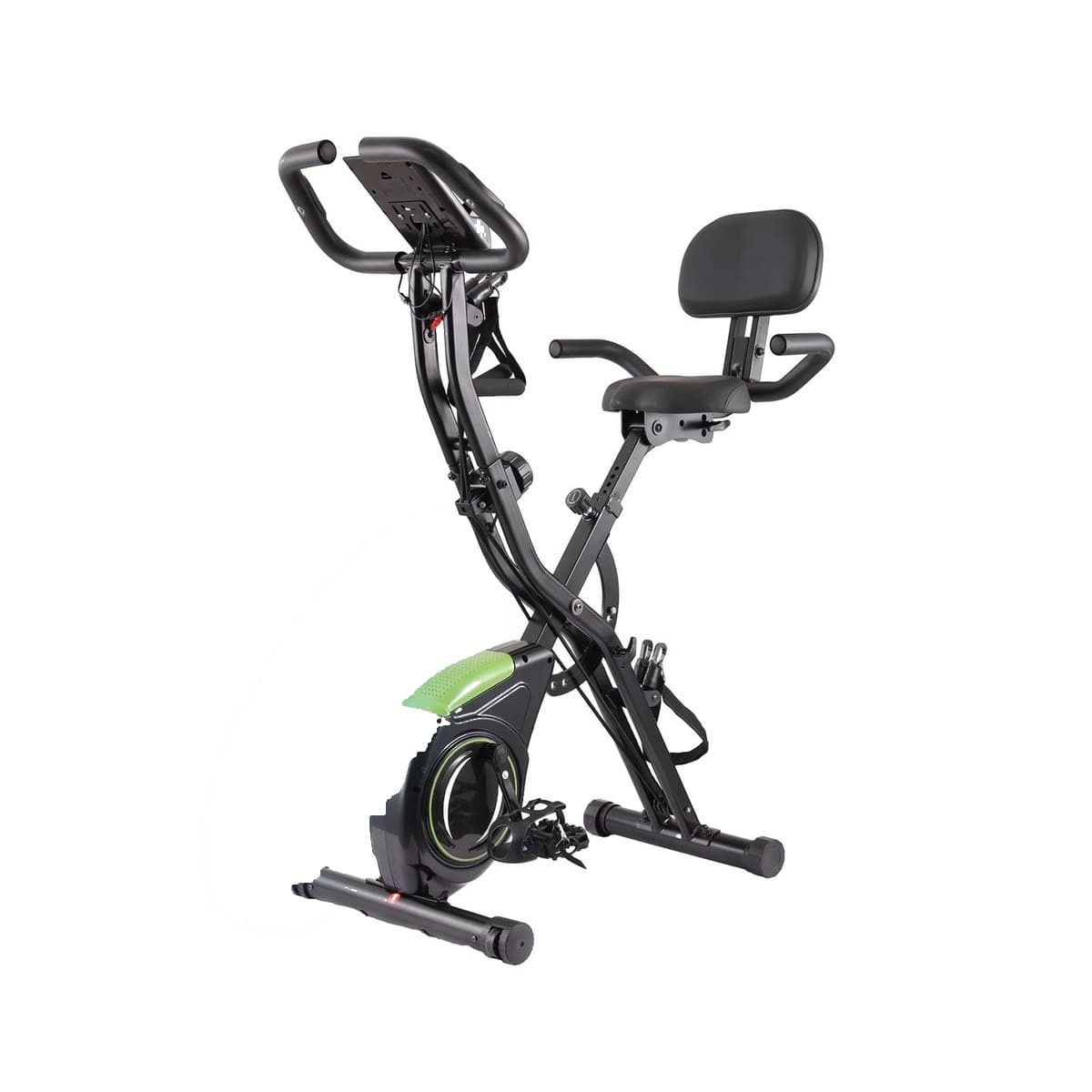
Comfort tends to set the ceiling before the evidence does. Our owner, at 107 kg, is honest in his own notes that about 15 minutes in one sitting is the comfortable limit on a compact saddle, and that is first-hand experience of our bikes rather than a study finding. If you love hour-long rides, ride them, and a comfortable seat matters more than any statistic: that is a real reason some riders choose a back-supported bike. But nobody should feel an hour is the entry fee. The evidence puts the entry fee at about fifteen minutes.
How long should a beginner ride?
Start with 10 to 15 minutes at a pace where you could still talk, and let the number grow as the habit settles. That is not us letting you off gently: roughly 15 minutes a day was the lowest dose linked to a measurably lower risk in the Lancet cohort[1], so a short first ride is the effective starting dose, not a token one. Add five minutes when the current length starts feeling easy, and stop adding when it fits your life. The setup matters more than stamina in week one: five minutes on getting your riding position right makes every ride after it more comfortable, and that guide owns the how.
We are a bike shop, not a clinic. If you have a health condition, or you are returning to exercise after a long break, speak to your GP before you start. This page describes what a study found, it does not prescribe anything.
How often should you ride an exercise bike?
Most days beats one heroic session, because the evidence on this question is counted in daily minutes, not weekend epics. The Lancet cohort's key numbers, 15 minutes a day and 92 minutes a week[1], describe a little-and-often pattern, and that pattern is also simply easier to keep: a slot that fits inside an ordinary day survives ordinary weeks.
Some first-hand colour, offered as our own habit rather than evidence: our owner rides for 15 minutes every hour through his working day, and ends up with about two hours of activity logged on his health app most days. He did not design that habit around the study; it grew because 15-minute slots are easy to take. That his everyday habit happens to sit exactly on the study's minimum effective dose is, we admit, a coincidence we enjoy. If your day has no such slots, a simple upright bike in front of the evening television covers the same minutes in one go.
Is 30 minutes on a bike the same as 30 minutes of walking?
Not quite: at a moderate pace, cycling burns more calories than walking over the same half hour, and it does it without impact on the knees. The proper numbers, and what your bike's display gets wrong about them, live in the calorie guide, which owns that comparison.
Can I lose belly fat by riding a stationary bike?
You can lose fat overall, and no ride length targets belly fat specifically, because you cannot spot-reduce: fat loss comes from a calorie deficit kept up over weeks, whatever the clock says. Our guide to exercise bikes and weight loss owns that question and answers it honestly.
And if the thing standing between you and fifteen minutes a day is not owning a bike: every exercise bike we sell ships free across the UK, and the budget-friendly bikes start at £59.99 including VAT. Fifteen minutes a day does not need an expensive machine.
How long on an exercise bike, questions answered
How long should you spend on an exercise bike?
Is 20 minutes a day on a stationary bike enough?
Is 1 hour on a stationary bike enough?
How long should a beginner ride an exercise bike?
Is 30 minutes on a bike the same as 30 minutes of walking?
Can I lose belly fat by riding a stationary bike?
Sources
The riding habit described on this page is our owner's own first-hand experience, not a study finding, and it does not count towards the sourced facts. This guide describes published research; it is not medical advice.